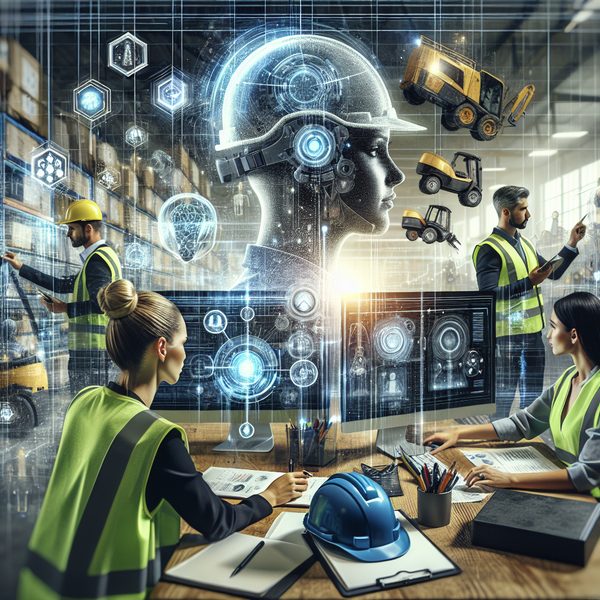
AI is transforming safety from reactive to predictive. Beyond detecting hazards and tracking compliance, it now enables organizations to anticipate near misses before they happen.
Unlike accidents, near misses often go unreported, despite offering critical insight into system vulnerabilities. What if we could anticipate them? With AI, we can.
From Reactive to Predictive Safety
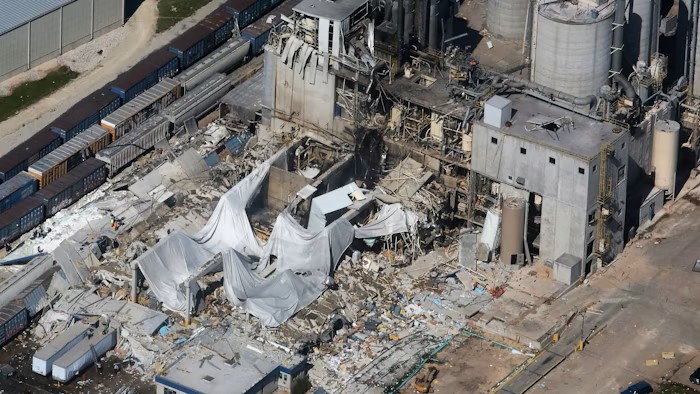
For years, safety management has relied on a reactive approach—investigating incidents after they occur to prevent recurrence. While effective to a point, this model is limited by one reality: action follows failure.
Today, that is changing.
Modern safety systems generate vast amounts of data—from inspections and training records to maintenance logs, behavioral observations, and wearable technology. The challenge is no longer data collection—it is turning data into timely, actionable insight.
From Data to Prediction
AI-powered predictive analytics allows organizations to move beyond hindsight.
By analyzing historical and real-time data—such as environmental conditions, shift patterns, worker behavior, task type, and fatigue indicators—AI can identify patterns that typically precede incidents.
Instead of waiting for something to go wrong, these systems anticipate elevated risk.
This enables safety professionals to act earlier—intervening before a near miss occurs, rather than responding after the fact.
Research continues to support this direction. A 2025 study by Nowobilski et al. demonstrated that AI models can analyze hazardous event descriptions and align with expert assessments at a high level of accuracy (87%), highlighting their potential to strengthen incident analysis and decision-making.
Use Case: AI-Enabled Wearables
One of the most practical applications of predictive safety is through AI-powered wearables.
On a construction site, for example, smart devices can monitor:
Worker fatigue
Posture and movement
Heat and noise exposure
When combined with operational data—such as task type, location, and nearby equipment—AI can detect when risk factors begin to converge.
Imagine an operator showing signs of fatigue while performing a high-risk lift near active foot traffic.
Rather than waiting for a near miss, the system can:
Issue real-time alerts
Prompt supervisory intervention
Enable immediate adjustments to the task or environment
This introduces a new level of control—targeted, real-time intervention before harm occurs.
Responsible Implementation Matters
While the potential is significant, successful adoption depends on trust and transparency.
Organizations must address:
Data privacy and protection
Accuracy and reliability of inputs
Clear communication with the workforce
AI should be positioned as a decision-support tool, not a surveillance system. When implemented responsibly, it strengthens both safety outcomes and organizational culture.
The Future is Predictive
AI is not just improving safety processes—it is redefining them.
Predicting near misses allows organizations to shift from:
Lagging indicators → Leading indicators
Reactive response → Proactive prevention
It transforms safety data into foresight.
Organizations that adopt predictive approaches will not only reduce incidents—they will build safer, smarter, and more resilient operations.
Final Thought
The future of safety isn’t about responding faster.
It’s about predicting earlier—and acting sooner.