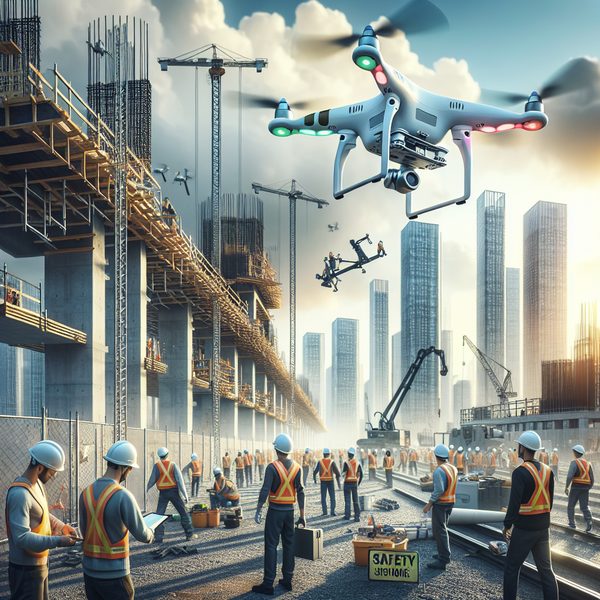
Drones are not a gimmick for cool photos. They are a practical safety tool that can support hazard identification, pre job planning, work at height oversight, inspection programs, emergency response, and documentation. The strongest drone programs are not about replacing people. They are about reducing exposure.
How Drones Reduce Risk and Raise Standards in Workplace Safety
Drones are often perceived as tools for capturing impressive
visuals—but in reality, they are becoming a powerful and practical asset in
modern safety management systems. At their core, drones are about one thing: reducing human exposure to risk while improving the quality of safety insights.
Why Drones Matter in Safety
Drones enable organizations to identify hazards and verify
conditions without placing people in harm’s way. This shift—from exposure to observation—is a fundamental advancement in how we manage risk.
They support safer operations by:
Eliminating the need for working at height.
Inspections can be completed without ladders, scaffolds etc.
Reducing proximity to high-energy hazards.
Minimizing confined space entry.
Drones provide critical visual data before anyone enters unknown or hazardous environments.
Improving documentation and accountability, high-quality, repeatable aerial data strengthens reporting, learning, and decision-making.
High-Consequence Applications Where Drones Add Immediate Value
Drones are particularly effective in managing and monitoring
high-risk activities, including:
Work at height oversight and fall risk reduction
Mobile equipment interactions and traffic management
Excavation and trenching safety
Structural integrity assessments, demolition, and post-incident reviews
Progress monitoring to verify safety controls in place
Facility inspections at height (roofs, stacks, tanks, structures)
Confined space pre-entry assessments
Process safety support, including thermal imaging and anomaly detection
Emergency response and incident scene management
Routine safety audits and contractor oversight
Incident investigations, including evidence capture
Airfield inspections and ILS calibration support as a cost-effective alternative
From Technology to Safety Control
Final Thought
Drones are not just enhancing how we see the workplace—they are
transforming how we protect it. Organizations that integrate drone technology effectively are not only reducing risk—they are raising the standard of what good safety management looks like.
Source: https://www.vanguardehs.com/articles/how-drones-reduce-risk-and-raise-standards-in-workplace-safety

test